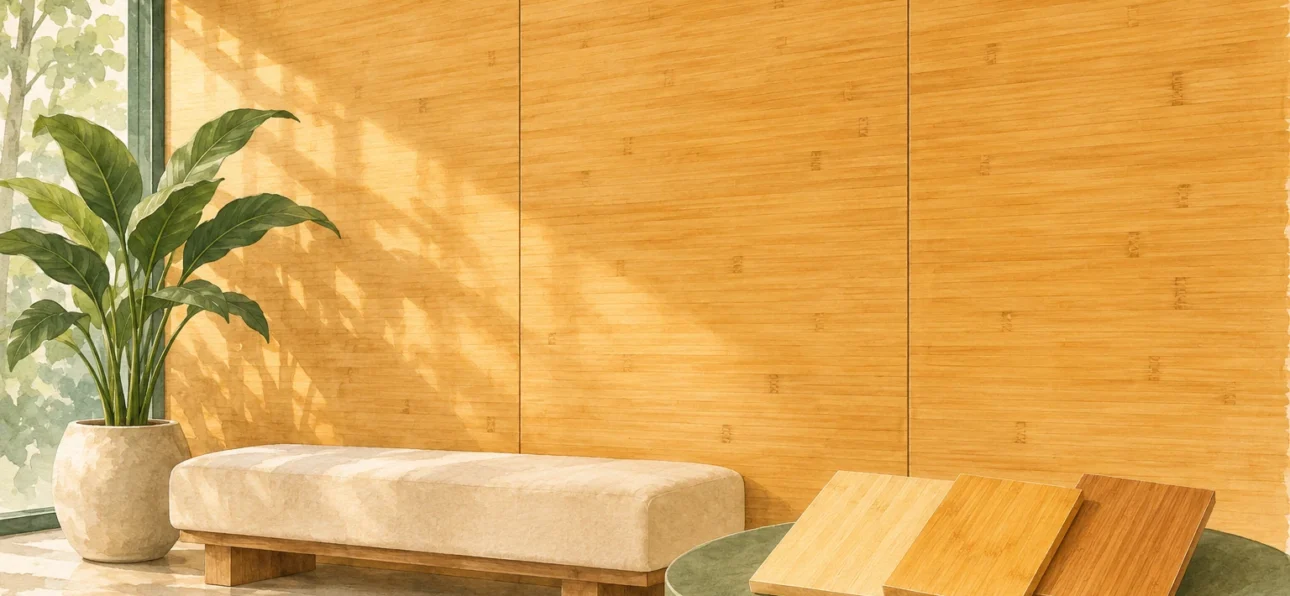
AI-generated interior concept illustration; not a completed customer installation.
Bamboo wall panels can introduce natural texture to a reception area, café, retail display or residential interior. The phrase covers several different materials, though, and a photograph of a finished wall may hide the differences that matter during specification.
Before comparing colours, identify the type of panel, how it will be supported and what performance the room requires. Then review a sample with the edge detail, joints and lighting you plan to use. This sequence helps turn a visual idea into a material specification that a supplier and installer can both understand.
Which bamboo wall panels suit your interior?
A rigid laminated bamboo panel is different from flexible decorative bamboo paneling. The first is a board product; the second can be a thinner facing assembled on a backing. A shaped or perforated acoustic system is another category with its own construction and installation requirements.
| Panel format | A useful starting question | What needs separate confirmation |
|---|---|---|
| Rigid laminated bamboo board | Will the edges be visible or enclosed? | Thickness, layer construction, fixing method and substrate |
| Flexible decorative facing | What surface will support the facing? | Backing, adhesive compatibility, seams and corner details |
| Purpose-designed acoustic system | What acoustic outcome is required? | Tested assembly, backing, installation and relevant reports |
Choose the category first. Similar-looking products should not be assumed to have the same fixing method, moisture suitability or acoustic performance.
For our current product information, see the wall-panel product details. For sheet constructions, use the bamboo panel comparison.
Compare grain direction and cut edges together
The face is the largest visible surface, but the cut edge can be equally important around a doorway, shelf recess or exposed corner. Request face and edge photographs from the same construction. Review an actual sample if the edge will remain visible.
A wider flat-pressed pattern produces a different visual rhythm from a finer edge-pressed face. Ask how the grain will run on the wall and whether adjacent panels need to be paired for appearance. Record the approved sample and the acceptable colour variation so the intended effect is clear during production.
Check the material under the project’s lighting. A sample viewed on a desk may appear different when placed vertically under grazing light. Inspect joints and surface reflections as part of the mock-up, especially for a long reception wall or a repeated retail fixture.
Plan the layout for bamboo wall panels
Draw the elevation with panel boundaries, sockets, doors and other interruptions. Include the joint widths and edge trims. Confirm the usable sheet dimensions and the grain direction before deciding how many panels to order.
For an illustrative wall measuring 3.6 metres wide and 2.4 metres high, three pieces each 1.2 metres wide would cover the width in a simple drawing. That sketch excludes joints, cutting allowances, trims and openings. Use it to start a layout discussion, rather than treating it as a purchase quantity.
Numbering panels on the elevation can make appearance matching and installation clearer. If offcuts may be used around smaller areas, show those parts on the same cutting plan. Keep a record of the approved arrangement of bamboo wall panels for any repeat order.
Coordinate bamboo wall panels, fixings and finish
The installer needs to know the condition and material of the wall behind the panels. Discuss flatness, dryness, backing, attachment points and access for maintenance. A decorative facing and a thicker rigid board can call for different solutions.
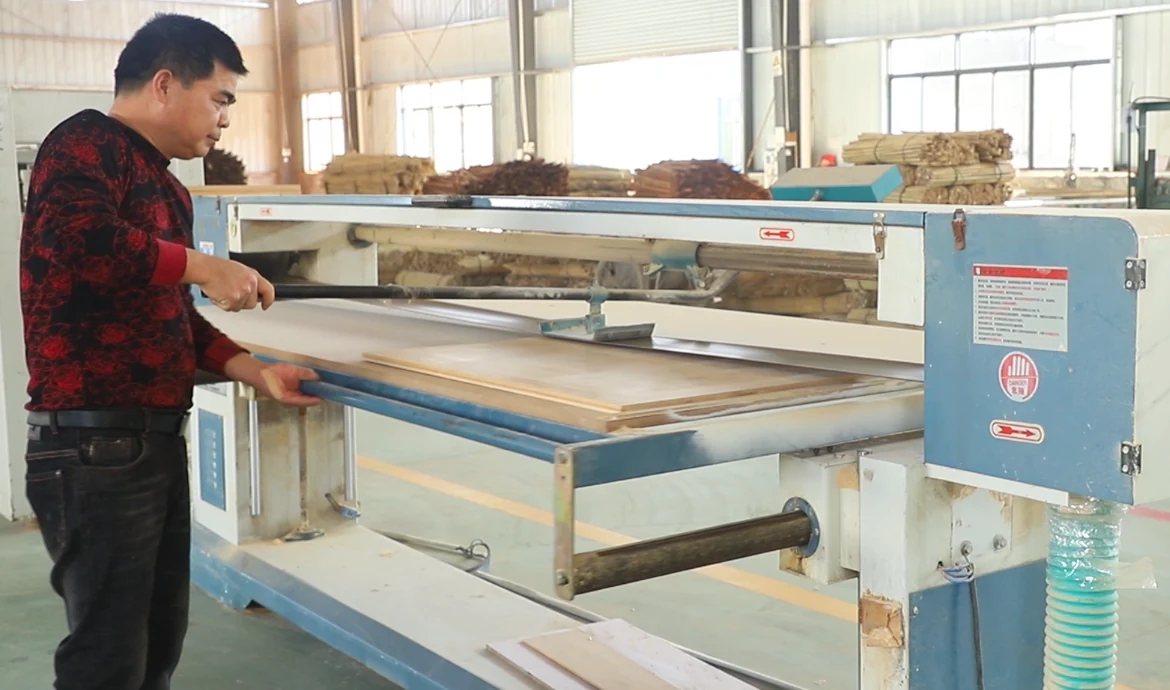
Ask the supplier for handling and fabrication guidance for the selected product. Agree on the sequence for cutting, finishing and installation, including how newly cut edges will be treated where required. Approve adhesive and coating compatibility on a sample assembly before applying them across the wall.
Avoid treating a generic wall panel article as a fixing schedule. Final attachment details should follow the selected product instructions and the project’s requirements.
Request evidence for the performance you need
An attractive bamboo surface does not establish a fire classification or a sound absorption result. If a project has those requirements, ask for reports relevant to the exact panel and installed assembly. Changes to a substrate, backing or finish may matter to the specification.
For a wider view of sound absorption, blocking and room planning, read the GSA acoustic comfort guidance. Decorative bamboo wall panels should be selected as part of that broader room design.
Likewise, do not assume an interior panel suits a splash zone, persistent damp or an exterior wall. Explain the expected environment to the supplier and ask for product-specific confirmation. Material appearance and suitability for the exposure are separate decisions.
For procurement, keep the approved specification and supporting documents together. This makes it easier to compare offers and check that the delivered material matches what was reviewed.
Make the inquiry specific enough to quote
Send the wall elevation, intended panel format, preferred grain, dimensions, quantity, visible edge details, finish and delivery destination. Include photographs of the design intent and any requirements for samples, packaging or inspection.
Where you are sourcing our laminated panel range, the current factory MOQ is 50 panels. Confirm whether your selected wall product uses that range or requires a separate specification. Do not transfer one product’s minimum quantity or technical information to another format without checking.
You can contact Rongjia with your interior project requirements after reviewing the product and construction pages. A sample and a clear drawing give both sides a useful basis for discussing the next step.
Bamboo wall panels FAQs
Are bamboo wall panels the same as bamboo plywood?
Some wall applications use laminated bamboo plywood. Other products use flexible facings or purpose-designed systems. Confirm the actual construction.
Do bamboo wall panels absorb sound?
Do not assume an acoustic rating for an ordinary decorative panel. Request test information for the specific acoustic system and installation when needed.
Can I install panels in a bathroom?
Describe the exact location and moisture exposure. Obtain confirmation for the selected material, backing, finish and attachment system before specifying it.
What should I approve before a bulk order?
Review the face and edge sample, colour range, drawing, dimensions and tolerances, finish, packaging and any required technical evidence. Record the agreed specification for inspection.