Bamboo fence maintenance can help a screen remain usable for longer, but keeping it sound and keeping it looking fresh are different goals. Decide which matters for your garden, then inspect the material and connections before choosing cleaning, recoating or replacement.
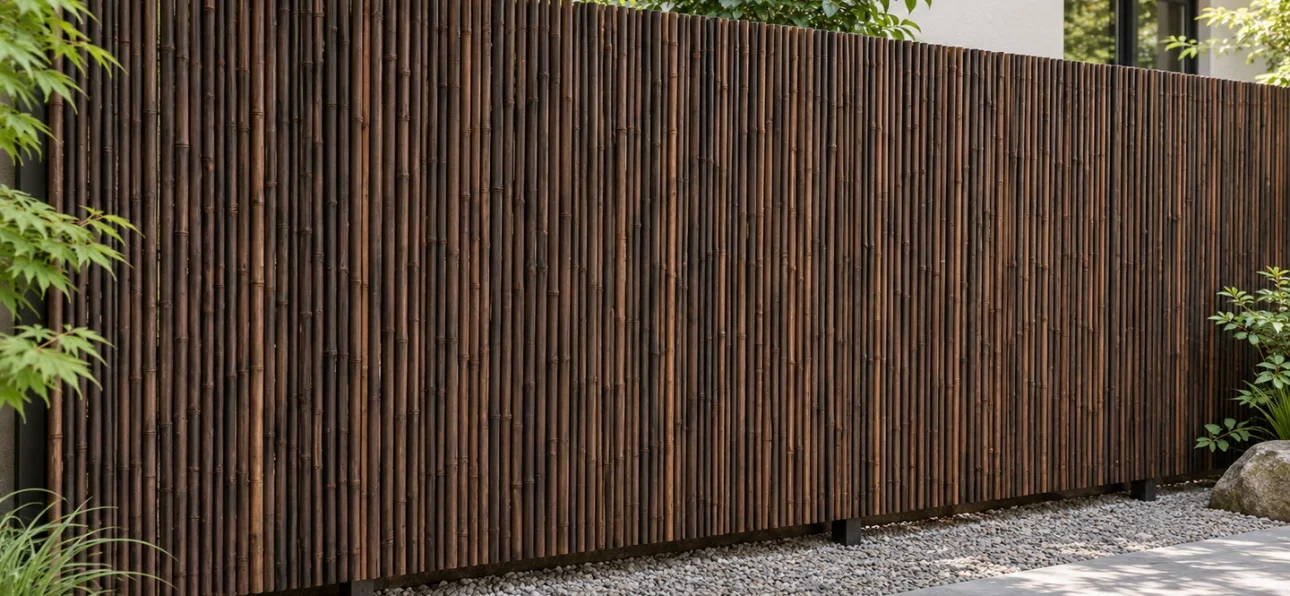
AI-generated garden scene based on Rongjia’s Wenli bamboo fence product reference.
How long does a bamboo fence last?
There is no standard answer that fits every fence. Some customers have told Rongjia that, with maintenance, their bamboo fencing has remained in use for seven or eight years. That is customer experience rather than a lifespan to expect from every installation. Exposure, moisture, the selected product and care all affect the result.
Maintenance helps reduce deterioration and decay risk. Even when a fence remains usable, its color and decorative appearance can change considerably outdoors. Caring for it does not keep the original fresh look indefinitely.
Separate screening function from decorative appearance. If the canes remain sound, securely attached and in place, a weathered fence can continue providing privacy even as its color fades. A gray screen may still suit a secluded boundary while falling short of the fresh finish wanted beside a café terrace or a garden seating area.
When should you replace a bamboo fence?
For customers who want a consistently fresh decorative appearance, Rongjia suggests considering replacement every 1–2 years. This is an appearance-based refresh recommendation. A sound screen used mainly for privacy may remain useful longer; loose, damaged or deteriorated sections need attention whenever they occur.
Rongjia’s affordable factory-supplied fencing makes regular visual updates easier to plan. Compare the replacement screen, delivery and fitting costs with the cleaning, coating and labor needed to maintain the appearance you want. Request a quote for your dimensions and destination to see which option suits your budget.
Bamboo is a fast-growing, renewable plant material, part of its appeal for garden screens. IFAD’s explanation of bamboo’s renewable growth provides background. When refreshing a screen, retain suitable supports and consider whether sound sections can serve a less decorative area.
Bamboo fence maintenance starts with what you see
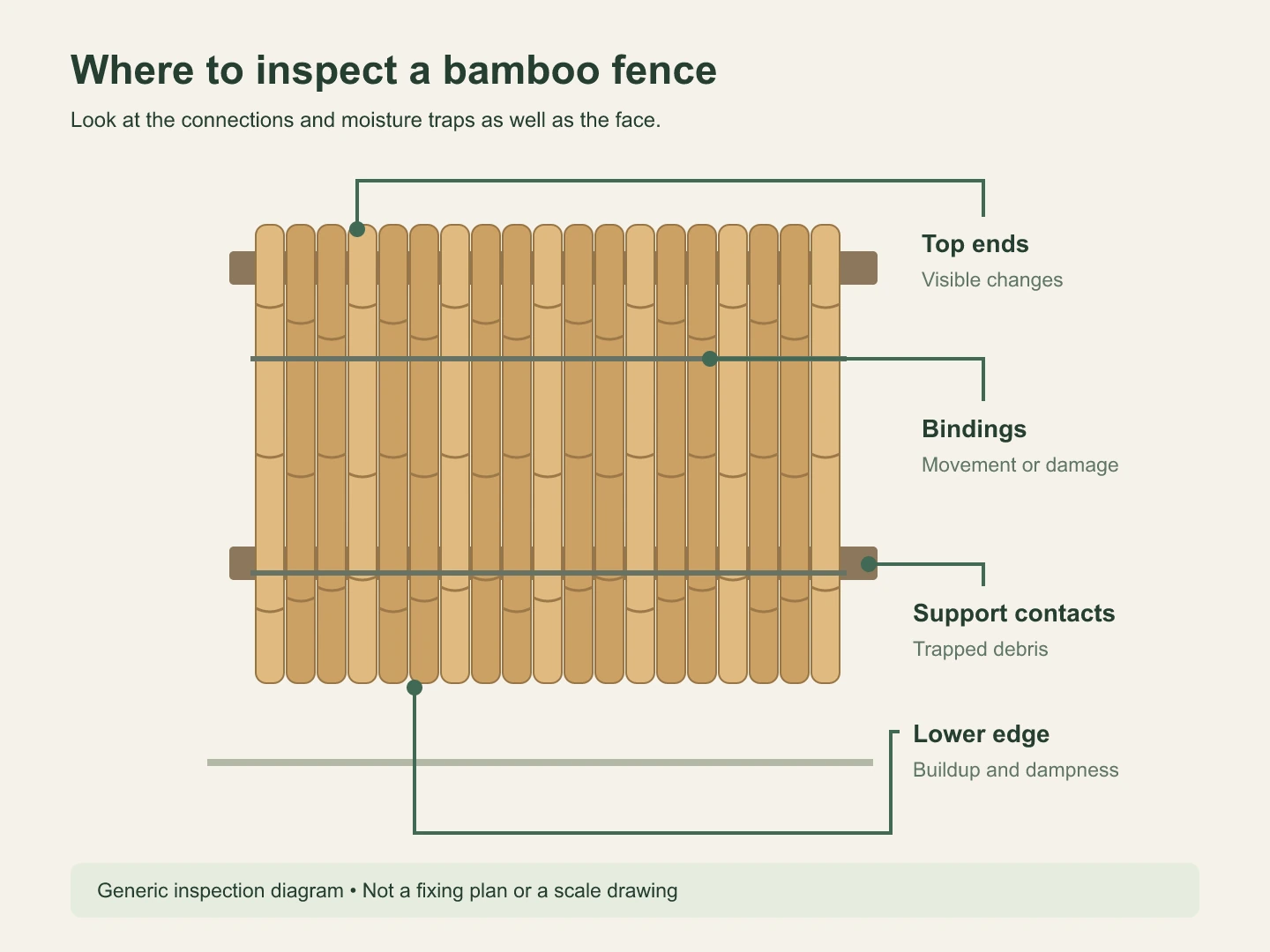
Walk along both sides where access permits. Check the top ends, lower edge, bindings and points where bamboo meets its support. Take an overall photograph and close-ups of areas that have changed. Repeating the same viewpoints later makes gradual changes easier to identify.
| What you notice | What to check next | First action |
|---|---|---|
| A more even gray or faded appearance | Surface condition and the current coating’s weathering | Check the care instructions and assess a small cleaning or coating trial area. |
| Dark patches or green surface deposits | Dirt, surface growth, water splash and how the area dries | Clean by the approved method and inspect the moisture source. |
| Cracks, rough edges or splinters | Location, sharp edges, changes over time and nearby bindings | Assess whether local repair or replacement is needed before refinishing. |
| Loose wire, moving canes or an insecure section | Bindings, backing and attachment points | Have the connection problem corrected before cosmetic work. |
Color is one observation to put beside the physical condition. Check whether the canes remain sound and properly attached. A photograph of a gray surface gives much less information than an inspection of the lower edge and connections.
Forever Bamboo’s restoration guide also starts with checking damage and surface changes before cleaning and finishing. Use those observations to decide which areas need attention first. Forever Bamboo restoration guidance
Find the areas that stay damp
Look along the bottom for leaves, mulch, soil splash and other material that has accumulated since installation. Clear the buildup so you can see the lower edge and keep the intended drainage space open. Check whether nearby planting presses against the bamboo or prevents access for cleaning.
Observe irrigation as well. A sprinkler that repeatedly wets the same section can create a very different exposure from the neighboring fence. If marks return in one place after cleaning, compare that area’s water exposure and drying conditions with a cleaner, drier section.
Backyard X-Scapes’ maintenance sheet specifically includes clearing debris around fencing, particularly in dark or wet areas. Add this check to routine garden care, then take a photograph of the cleared lower edge for comparison at the next visit. Original bamboo fencing maintenance sheet
If the fence sits in wet soil or its backing prevents drainage, have the detail reviewed. Our bamboo fence installation guide explains the supporting structure and fixing questions to resolve.
Clean, dry and assess the coating
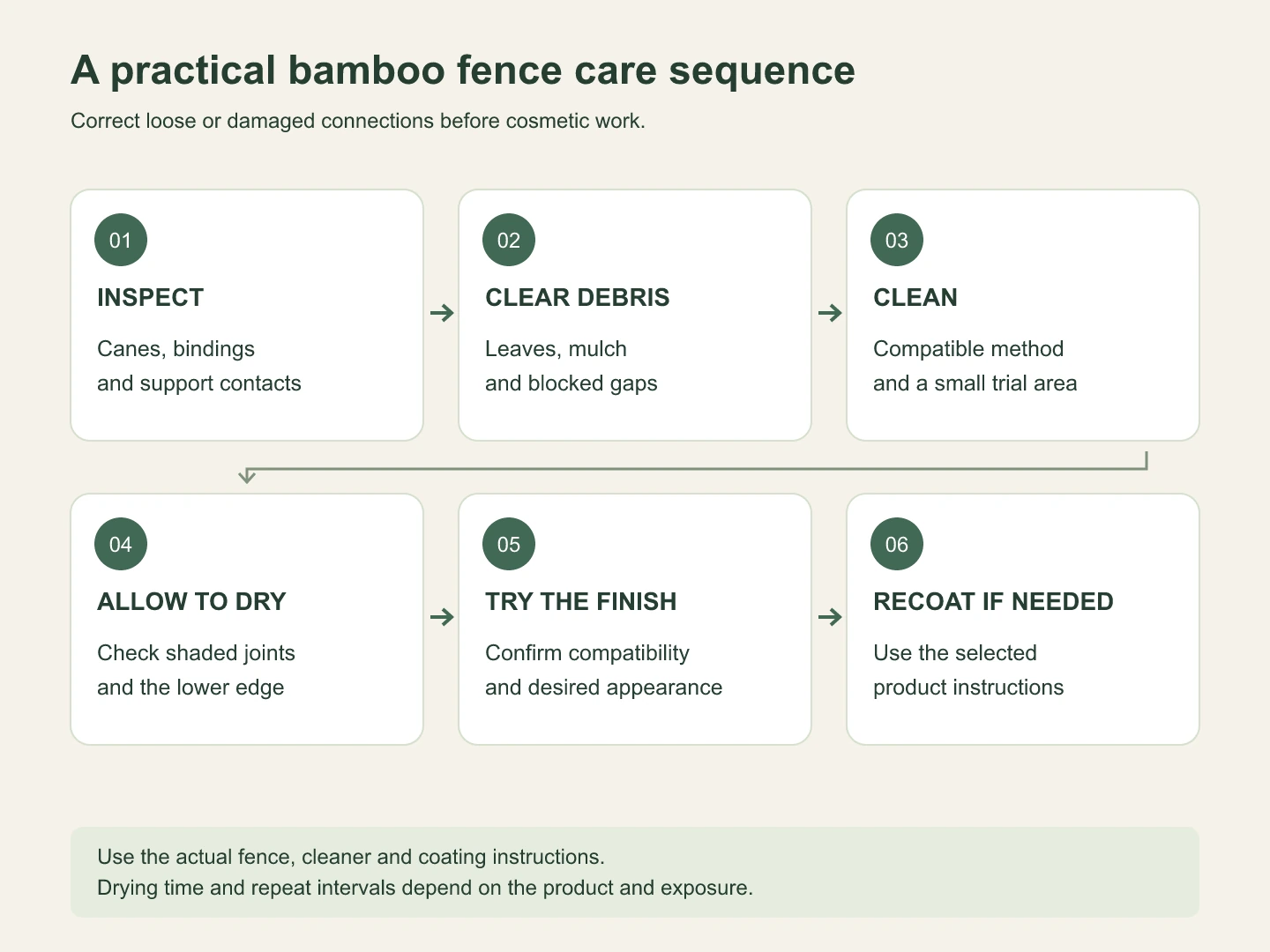
Choose the method for the existing surface. Identify the product and finish, then use the supplier’s compatible cleaning instructions. Trial a small, less visible area before treating the whole fence. Check for unwanted color change or damage to the current coating.
Remove deposits with the specified tools. A suitable brush and rinse method should lift dirt while preserving the material and finish. Work along the affected areas and remove loosened debris. Follow the selected cleaner’s directions for dilution, contact time, protective equipment and rinsing.
Allow drying before coating. Inspect the lower edge, joints and shaded areas as well as the easily visible face. A dry-looking upper surface may dry differently from a sheltered contact point. Use the coating manufacturer’s requirements for surface dryness and suitable application weather.
Check compatibility and the result on a small area. Confirm that the proposed finish is intended for bamboo and for the coating already present. Follow its preparation and recoating instructions. Assess the trial area for the appearance you want before continuing across the fence.
Ask separately about color, sheen and UV protection. A transparent finish and a darker bamboo color describe appearance; look for the selected coating’s stated outdoor protection. Bamboo Australia’s fencing page shows how a supplier ties outdoor care to a particular coating system. Confirm the corresponding instructions for your Rongjia product. Bamboo Australia fencing guidance
Build a care record that helps the next visit
After strong wind, heavy rain or irrigation changes, inspect again and compare photographs. Keep a short record for each fence section so the next visit or replacement order starts with useful information.
| Record | Useful detail |
|---|---|
| Fence identification | Product reference, location and installation date |
| Surface treatment | Existing finish and the instructions used |
| Observation | Photograph reference, affected location and visible change |
| Work completed | Debris cleared, cleaning method, repairs and any coating applied |
| Follow-up | Area to revisit, reason and responsible person |
For a replacement order, share your record, dimensions and priorities with Rongjia. Browse the fencing range and send your project details to discuss a suitable screen and care plan.