Bamboo plywood countertops can bring a warm, visible bamboo surface to an indoor kitchen or work area. Before ordering, settle four things together: the panel construction, the exposed edges, the finish around openings, and the support below. A finished-looking top face tells you only part of the story.
Start with your drawing and decide who will complete each stage. This helps a cabinetmaker price the remaining work and helps a buyer compare offers that actually cover the same job.
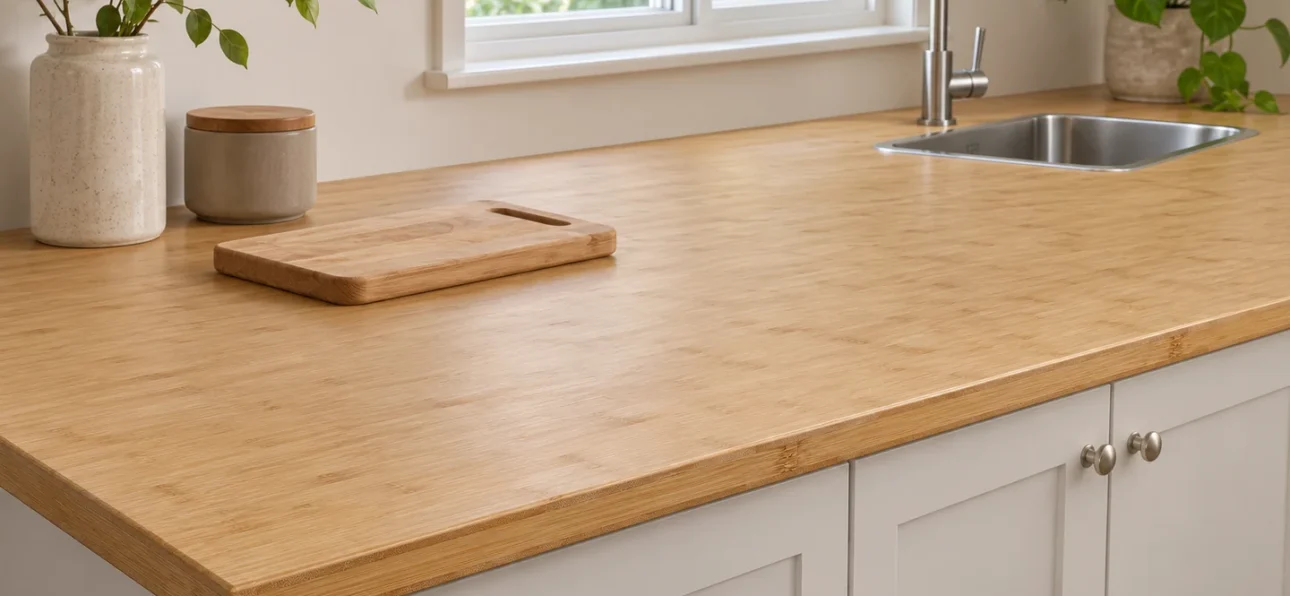
AI illustration of a bamboo countertop application.
Are you buying a panel or a finished countertop?
The word “countertop” can describe several delivery stages. Use a short responsibility table before comparing prices.
| Delivery stage | What the order needs to describe | Work to assign before installation |
|---|---|---|
| Full panel | Sheet dimensions, finished thickness, layer arrangement and surface condition | Cutting layout, sizing, openings, edge work and finishing |
| Cut-to-size blank | Final outline or stated machining allowance; which edges are already prepared | Remaining machining, holes, finish and fitting |
| Machined or finished worktop | Approved drawing, edge profile, openings and exactly which surfaces are coated | Site fitting, any new cuts, their resealing and installation |
Write down who supplies the sink template, who machines the opening and who treats any site-cut edges. A factory-coated top can still need work after the installer trims an end or drills a tap hole. The quotation should make that handover clear.
Specify the edges of bamboo plywood countertops
Ask for a sample showing the top face, a long edge and an end edge. The layer arrangement can look different from each direction. An edge profile also exposes a different view of the layers from a square edge, so approve the profile you intend to use.
MOSO’s solid-panel technical sheet identifies kitchen worktops as an application where the panel side can remain visible. That makes the edge part of the design decision. Check it before choosing the panel, rather than treating it as a detail to hide later.
Rongjia applies the same strict material-selection standard to its core and surface layers. Ask to see that construction in a representative edge sample and include the accepted appearance in the order. The Horizontal H-Structure Bamboo Panel is one starting point for discussing a worktop build.
Also identify the intended top and underside before cutting. Carry those markings onto smaller pieces so the face approved on the sample ends up in the right position.
Plan the sink opening and finish as one job
A sink opening creates new exposed surfaces inside the panel. An already-coated face does not finish the freshly cut wall of the opening. The same issue occurs at a new end cut or drilled hole.
Use this sequence with the fabricator: approve the appliance template and location; check how the remaining material will be supported; machine and smooth the opening; then complete the specified finishing and sealing before fitting. Any later site alteration needs its own finishing step.
Bamboo Design’s bamboo-plywood fabrication guidance addresses the top, underside, edges and cutouts, and calls for newly cut areas to be resealed. Its central lesson for a purchase order is useful: the finish schedule must name every surface, including the ones hidden after installation.
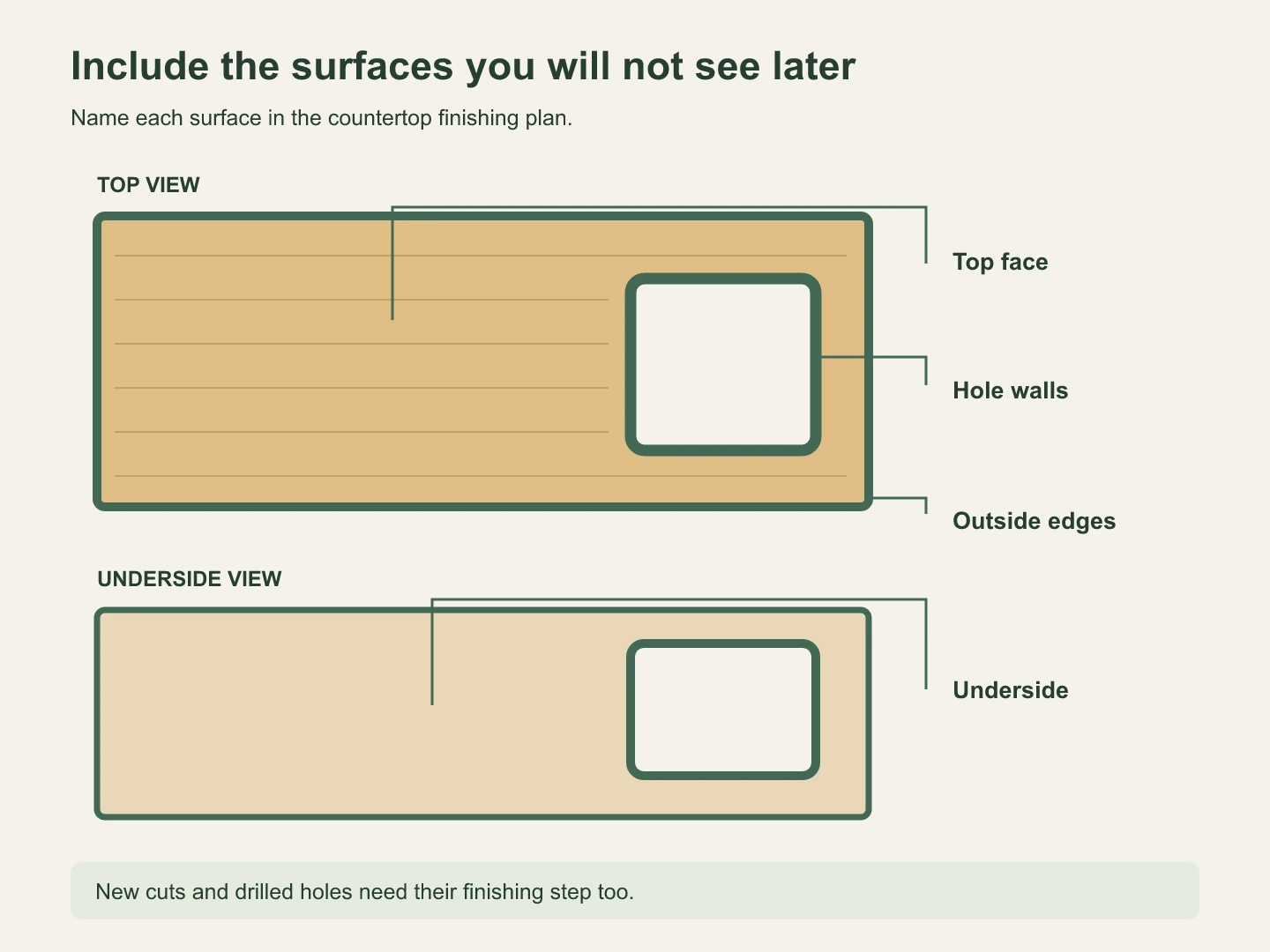
Choose the finish for the intended use with its supplier. Agree preparation, application, drying or curing requirements, and maintenance. Coating a panel does not make every construction suitable for standing water. Around a sink, check the joint and keep water from remaining on the surface.
Show support and movement on the drawing
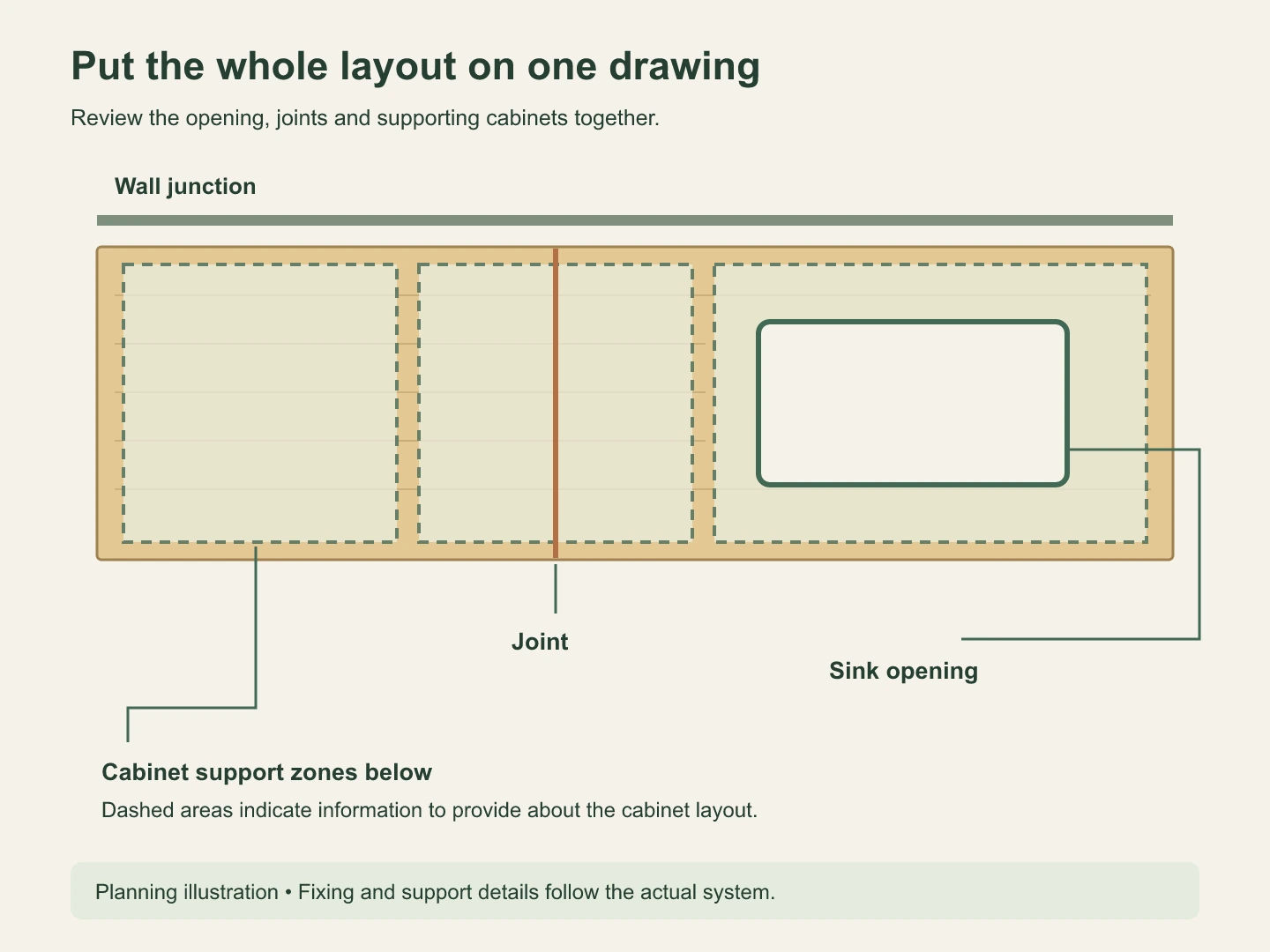
Put the cabinet positions, joins between countertop sections, sink opening and any overhang on the same drawing. The installer can then review the complete support arrangement. Thickness alone does not establish how far a particular top can project beyond a cabinet.
The BamBüPly countertop installation guide describes supported installation and fixings that allow the material’s expansion and contraction. Use the instructions for the actual panel and cabinet system to set the fixing details. Avoid choosing a screw pattern solely because another supplier shows it for a different worktop.
Before fabrication, the cabinetmaker should check the delivered panel and the installation environment, then follow the applicable storage and conditioning instructions. Inspecting at this stage is more useful than discovering a damaged edge after the opening has been cut.
Turn those decisions into an order checklist
Send Rongjia one drawing revision with the finished dimensions, quantity and destination. Attach the approved face-and-edge reference, requested layer arrangement, surface condition, sink template and finishing responsibility. Include the installer’s support requirements so the panel proposal can be reviewed against the application.
Rongjia quotes bamboo panels by cubic metre. For comparison, ask for the equivalent panel price for the exact dimensions and thickness, then separate the agreed machining, finishing, packing and delivery scope. Our bamboo plywood price guide explains the unit conversion.
Ask your chosen third-party inspector to check the shipment against the drawing, sample and written criteria. List dimensions, edge condition, visible faces and the agreed machining and coating scope. Arrange any necessary section sampling or performance testing separately from a surface inspection.
Finally, keep the care instructions with the handover: use a separate cutting board, put hot cookware on a trivet, wipe up spills and maintain the selected finish. Send your project details to start with the panel and processing scope your countertop actually needs.