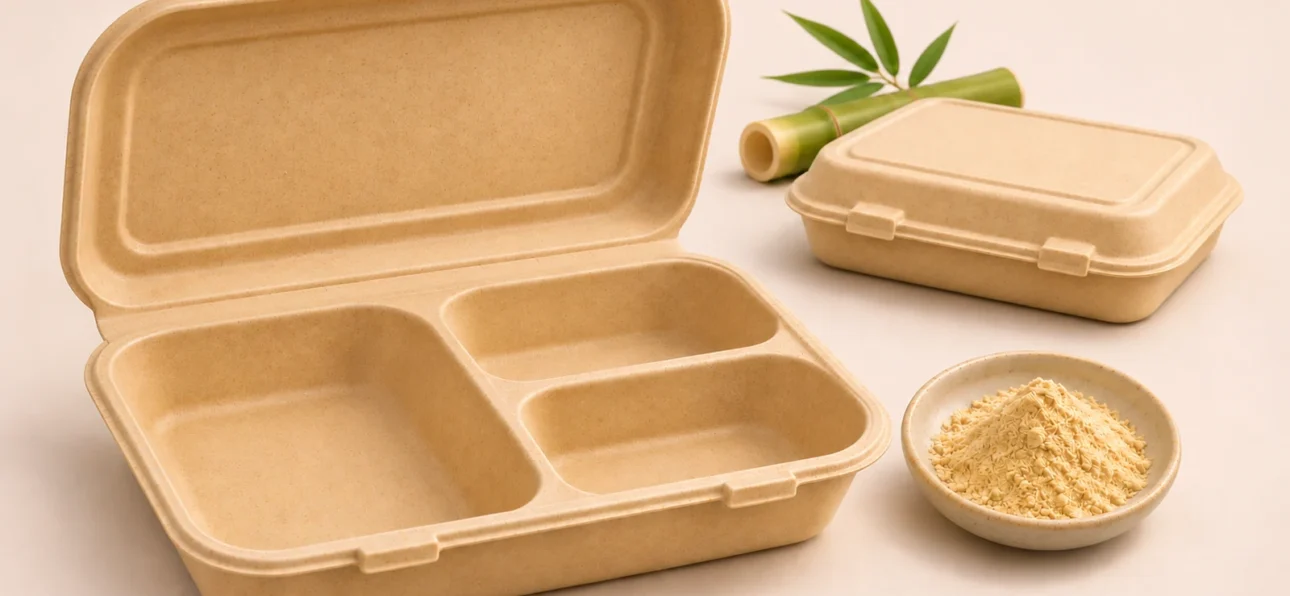
Bamboo powder food containers give processed bamboo a further use in everyday takeaway packaging. Rongjia’s main format is the clamshell, a meal box with its lid attached to the base by a hinge. We grind recovered bamboo fragments into powder and press material into disposable meal boxes. Our proprietary formulation uses natural materials, with particular attention to keeping the material smell mild. Separate-lid containers are also available.
For a restaurant or packaging buyer, the useful comparison covers both the material and the meal. How does the box handle food? What makes it different from a plastic tray, a paper box or a molded plant-fiber container? These questions help turn an environmental preference into a packaging specification.
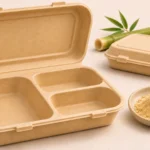
AI illustration of a bamboo powder clamshell meal box with its lid attached.
Where bamboo powder food containers offer value
A useful destination for bamboo fragments. Grinding gives small bamboo pieces a form that can enter meal-box production. This is Rongjia’s concrete material-use benefit. The recovered bamboo becomes an ingredient for another product, extending its use beyond the original processing stage.
A plant-derived material component. Bamboo supplies the powder ingredient. Buyers interested in renewable raw materials can examine that ingredient’s origin alongside the complete container specification. The proportion and nature of the other ingredients determine the final material’s properties.
A lid that stays with the box. Rongjia’s main clamshell format keeps the lid and base connected during packing. Staff fold the lid over the meal and engage the closure. Check the selected model’s capacity, compartment layout and hinge when assessing how it fits your serving routine.
Attention to material odor. Rongjia emphasizes a mild material smell compared with the strong odor sometimes encountered in pressed bamboo powder containers. This is a factory-described product characteristic that buyers can assess with representative samples. A meal box sits close to the food, so the impression when it is opened matters to the dining experience.
When comparing samples, keep the storage conditions and the time between opening and assessment consistent. Assess the empty box first, then check it with the intended meal under the supplier’s stated use conditions. Record any noticeable packaging smell alongside the food’s own aroma. Food-contact documentation should be reviewed as a separate purchasing requirement.
How the main takeaway materials differ
The table compares material families. Each finished product still needs its own specification, including the lid and any lining.
| Material | How the container is constructed | Useful purchasing distinction |
|---|---|---|
| Bamboo powder-based material | Ground bamboo is used in a material formed into a container | Offers a bamboo-derived ingredient and, at Rongjia, a route for recovered fragments. Compare odor, formulation information and actual performance. |
| Conventional plastic, such as polypropylene (PP) or polyethylene terephthalate (PET) | A specified plastic resin forms the container body | PP and PET serve different applications. Identify the resin and its stated heating conditions. |
| Paperboard | A paper-based body, with a moisture or grease barrier where needed | Check the food-contact surface and seams as well as the paper body. Printing and presentation can be part of the specification. |
| Bagasse or bamboo pulp | Plant fibers are pulped and molded into a shape | Uses a fibrous structure. Coatings, additives and the selected model affect wet-food and oil performance. |
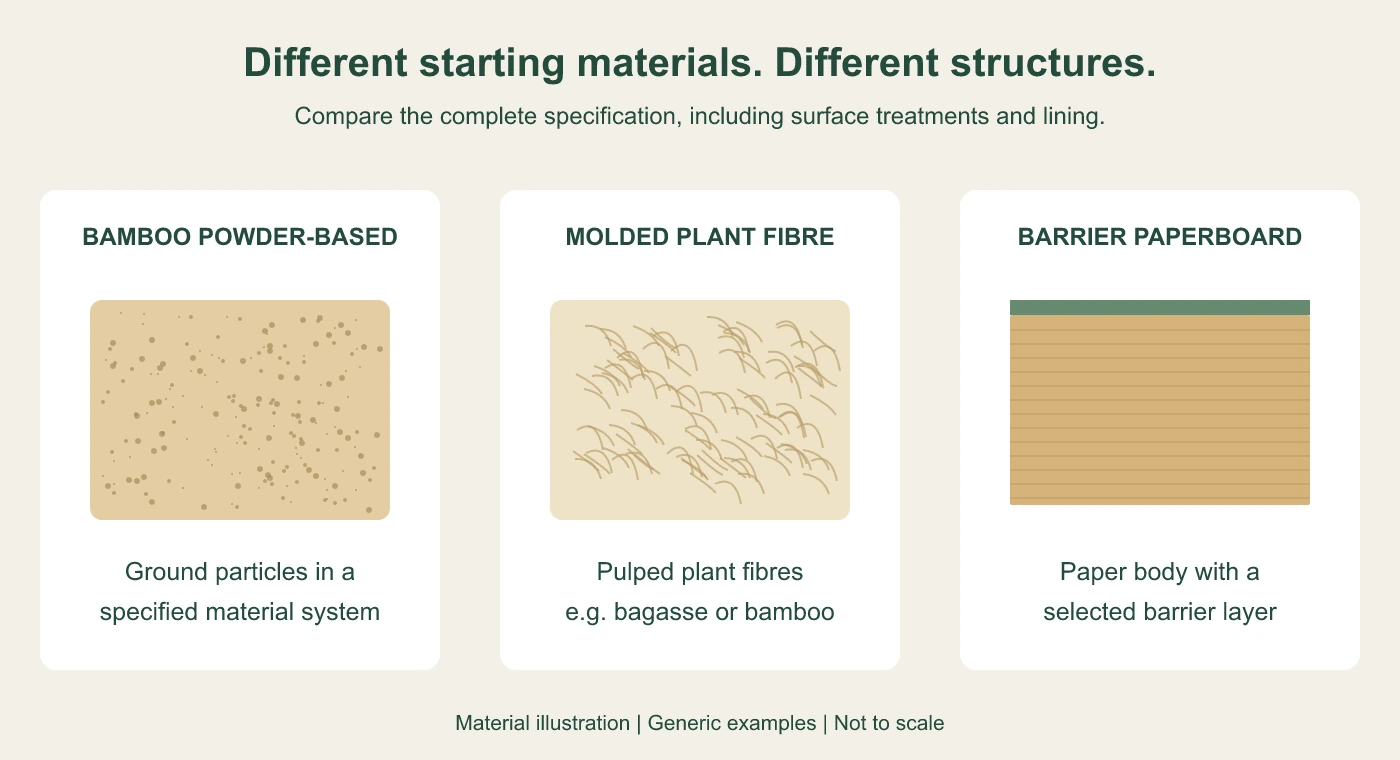
Compared with plastic. A bamboo powder box introduces bamboo as an ingredient. For practical use, compare it with the correct plastic product. Suppliers distinguish PP hot-food packaging from PET or recycled PET (rPET) cold-food ranges. A clear salad lid and a reheating tray have different jobs. Rongjia’s sample should be evaluated against the container you actually use.
Compared with paper. A paper box has more than its visible paper surface to consider. Foodservice manufacturers use barrier systems for liquid and grease resistance, including polymer linings in some products. The body, lining and lid together determine the package’s behavior. Huhtamaki’s foodservice range illustrates these different structures. Huhtamaki foodservice packaging
Compared with bagasse and bamboo pulp. Bagasse is the fibrous residue left after sugarcane juice extraction. Pulp molding uses those fibers, or fibers from other plants, to form the box. Bamboo powder starts with ground particles. The difference in raw-material form makes the formulation and finished structure worth examining. Vegware describes the bagasse route in its materials guide. Vegware materials
Choose for heat, oil and the complete closure
Start with your most demanding regular meal. For an oily curry or a dish with sauce, check whether the base retains its shape and whether moisture or oil appears underneath during the actual holding period. For a drier rice meal, also check loaded rigidity and how easily staff can close the lid.
The coating can change the suitable menu even within one material family. Harvest Pack distinguishes uncoated bagasse containers from its PLA-coated versions for wetter and oilier foods. That is a reason to compare the exact model instead of judging every fiber box by one sample. Harvest Pack materials
Hot filling, microwave reheating and oven cooking are separate use conditions. Ask for the permitted temperature, contact time and appliance instructions for the selected box. The FDA’s food-contact tables distinguish food types and conditions of use, including fatty foods, hot filling, refrigeration and reheating. FDA food types and use conditions
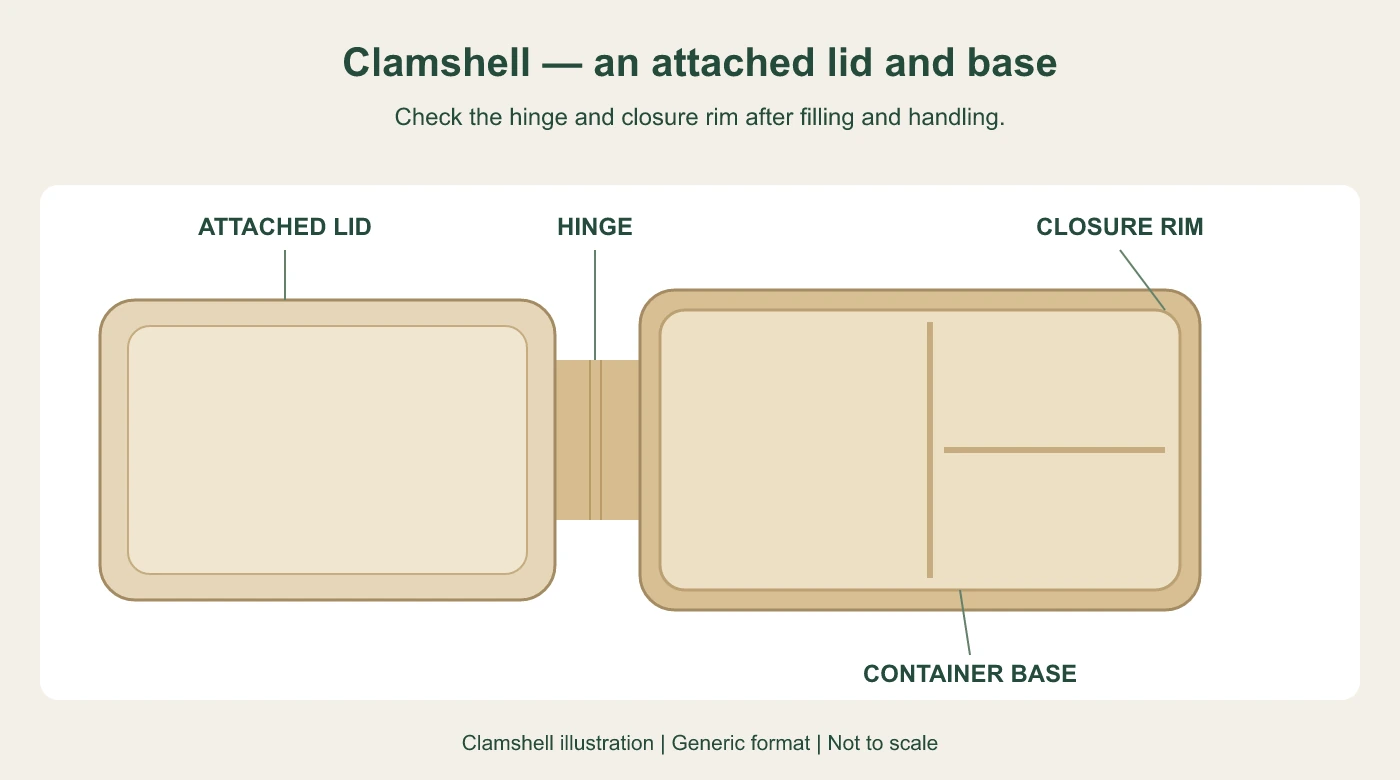
For the main clamshell range, fill the sample and check that the hinged lid closes properly around the rim. Inspect the hinge and closure after the handling and stacking your delivery operation normally uses.
Rongjia also offers separate-lid options. For those models, confirm the supplied lid’s fit and material. A plant-fiber base may be paired with a plastic lid, with different heating or disposal instructions for each component.
Compare disposal routes and the price of a complete pack
Renewable ingredients describe where material comes from. Compostability depends on the finished formulation, relevant testing and the receiving waste system. For a claimed compostable product, check whether the claim covers the base, coating and lid, and whether it applies to home or industrial composting. European Bioplastics explains how material origin and biodegradation properties are assessed. European Bioplastics material definitions
Compare quotations for the same usable capacity, format, quantity and delivery terms. For a clamshell, price the complete hinged box. For a separate-lid option, include its matching lid. Add outer packing and any other components needed to serve the meal, together with any changes to packing work.
For Rongjia’s bamboo powder meal boxes, begin with the benefits we can explain directly: giving bamboo fragments a useful destination and prioritizing a mild material smell in our formulation of natural materials. Bring your current container and intended menu into the sample comparison. Ask Rongjia about meal-box samples and specifications, or learn about our manufacturing business.