

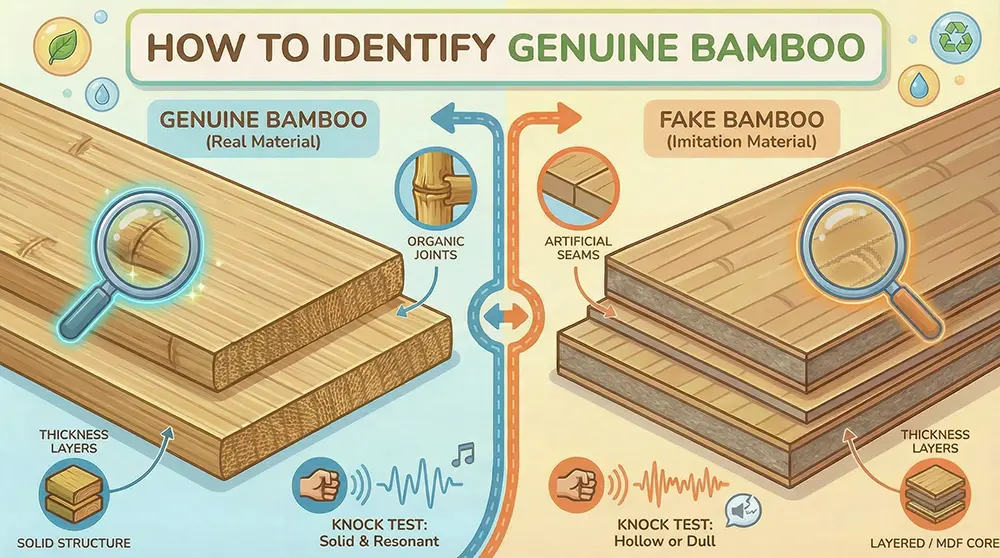
Bamboo has become a top choice for eco-friendly homeware, furniture, and kitchen essentials. However, its rising popularity has led to an influx of low-grade or counterfeit “bamboo” products in the market. For both brands and consumers, knowing how to distinguish genuine bamboo and evaluate its craftsmanship is essential.
1. Identifying Genuine Bamboo Material
Not all products labeled “bamboo” are made from natural bamboo. Some use MDF, particleboard, or low-grade wood with bamboo-like veneers.
| Feature | Genuine Bamboo | Fake/Counterfeit |
|---|---|---|
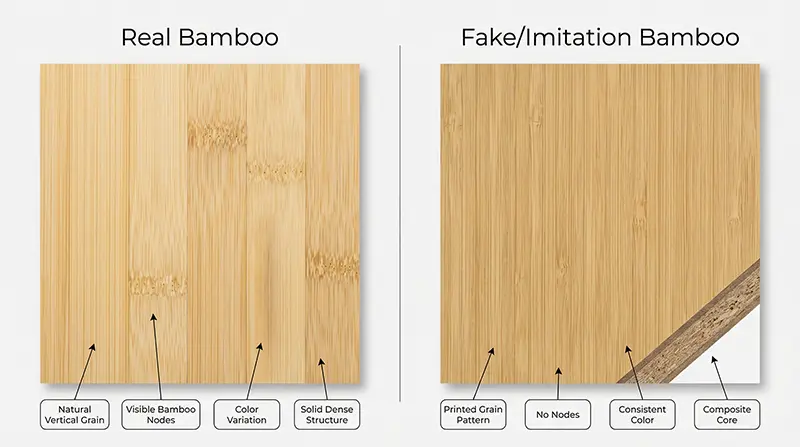
| Grain Pattern | Long, straight, slightly uneven vertical lines; distinct bamboo nodes. | Overly uniform, “printed” appearance; no natural nodes. |
| Color Variation | Slight shade differences between pieces. | Entirely consistent color (like laminate). |
| Hardness & Sound Test | Harder than most woods; produces crisp, solid sound when tapped. | Muffled/hollow sound (common in MDF/engineered wood). |
2. Assessing Joint Structure: Lamination Quality
- High-Quality Joining:
- Tight, seamless bonding
- Vertical/horizontal alignment
- No visible glue residue or gaps
- Low-Quality Warning Signs:
- Uneven/misaligned strips
- Large color differences (mixed-quality bamboo)
- Cracks around joints
- Weak glue odor or sticky residue
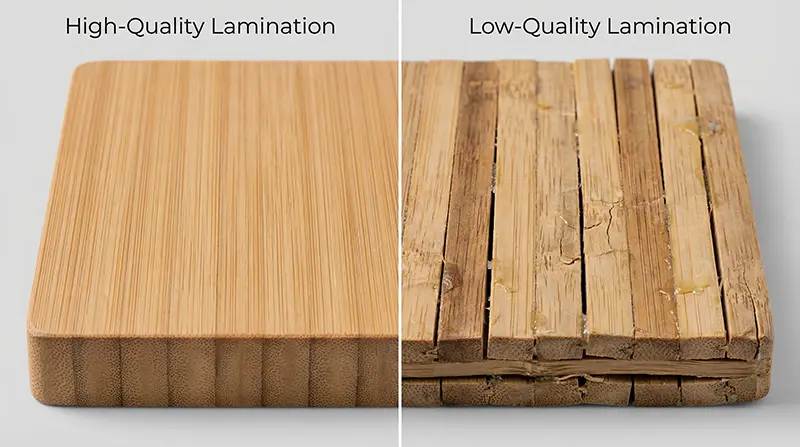
Tip:High-pressure lamination ensures strength. Poor lamination causes structural failure.
3. Thickness Matters: Stability & Durability
Thickness directly impacts warping resistance, load-bearing capacity, and lifespan.
| Product Type | Ideal Thickness | Why It Matters |
|---|---|---|
| Cutting Boards | 1.5–2.5 cm | Prevents cracking under force. |
| Furniture (e.g., tables) | ≥2 cm | Ensures stability and weight support. |
| Trays/Storage Boxes | 0.8–1.2 cm | Balances lightness and durability. |
Thin bamboo items (<0.8 cm) deform easily, especially in humid environments.
4. Bamboo Age: Maturity = Superior Quality
Age affects hardness, density, and longevity. Moso bamboo (Phyllostachys edulis) is the gold standard.
| Age Range | Properties | Suitability |
|---|---|---|
| 4–6 years | Peak hardness, optimal density, maximum durability. | ✅ Ideal for high-end products. |
| <3 years | Softer, lightweight, prone to cracking. | ❌ Avoid for structural uses. |
| >6–7 years | Brittle, easily splits. | ❌ Not recommended. |
Reputable manufacturers specify “4–6-year Moso bamboo” as a quality marker.
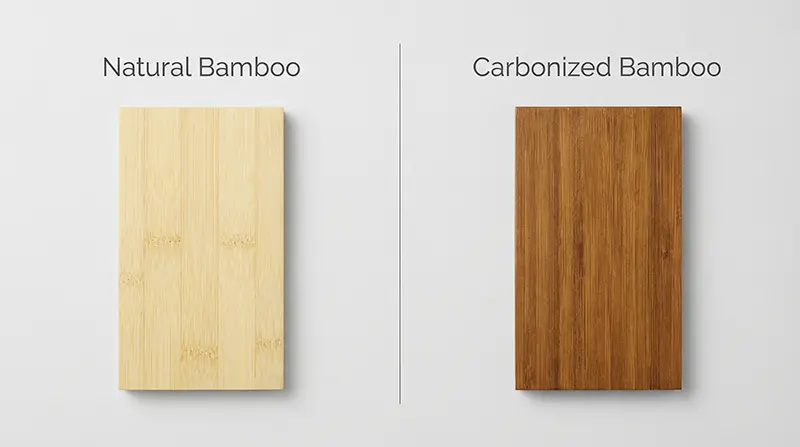
5. Carbonization: Natural vs. Carbonized Bamboo
Carbonization (heat treatment) alters color and properties.
Natural Bamboo
Light color; hard texture; visible grain
Carbonized Bamboo
Amber/dark brown; warm tone; high hardness
6. Certifications & Quality Indicators
Look for these hallmarks of premium bamboo:
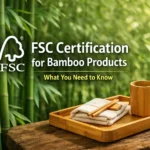
- FSC Certification:Ethically sourced materials.
- Smooth Finishing: Best Splinter-free sanding.
- Food-Safe Adhesives: Critical for cutting boards/utensils.
- Anti-Mold/Anti-Crack Treatment: Extends longevity.
Reputable manufacturers specify “4–6-year Moso bamboo” as a quality marker.
7. Surface Finish: The Ultimate Quality Test
- High-Quality Joining:
- Smooth, fiber-free texture
- Plant-based/food-safe oil coatings
- Matte or natural sheen (no synthetic gloss)
- High-Quality Joining:
- Sticky or chemical-smelling
- Uneven shine
- Sharp edges